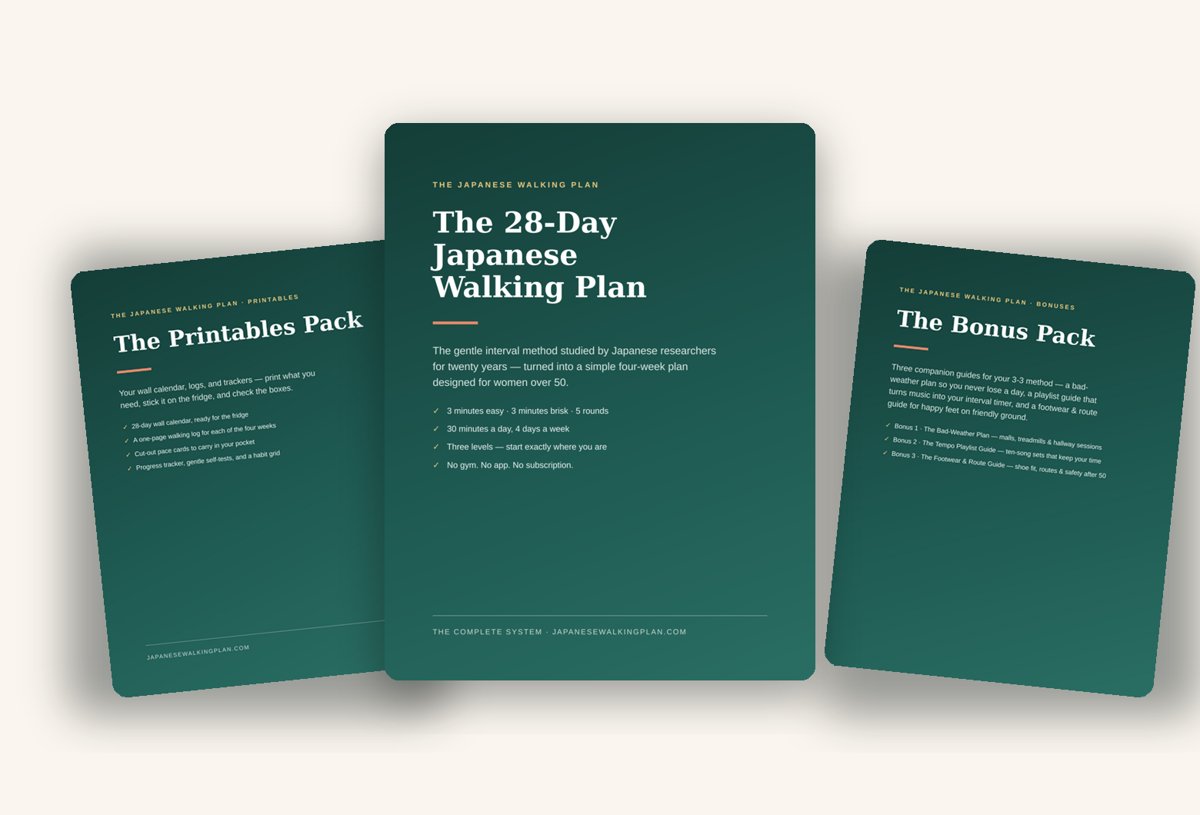
Japanese researchers spent 20 years proving that changing your walking rhythm — not walking longer — is what rebuilds strength, stamina, and energy after 50. This is that method, turned into a simple 28-day printable plan.
The "3-3 method" — 30 minutes, 4 days a week. That's it.
Get The Complete Plan — $27One-time price · Instant download · 30-day guaranteeThe walking method covered by TODAY · CNN · TIME · AARP
The complete system · 55 pages across 3 guides · delivered instantly
The energy you're walking for never quite shows up. The stairs don't get easier. And every app "solution" wants $40 a month and your credit card number for a subscription you'll spend an afternoon trying to cancel.
Here's what the research says: it's not your effort. Walking the same comfortable pace every day stopped challenging your body years ago — so there's nothing new for it to adapt to.
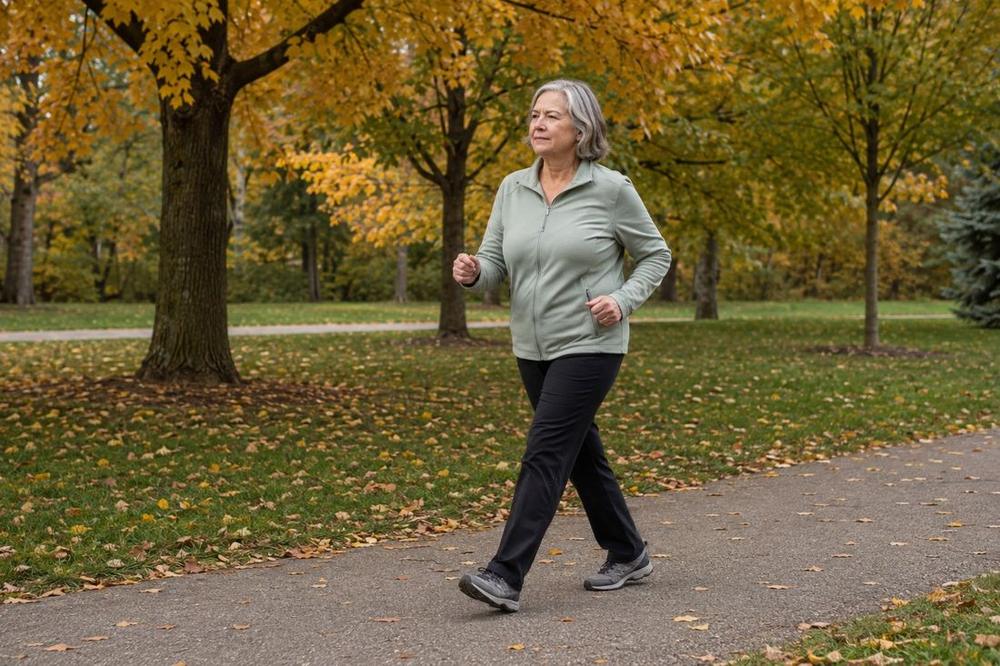
In the early 2000s, exercise physiologists at Shinshu University in Japan designed a fix so simple it almost sounds like a trick: alternate 3 minutes of easy walking with 3 minutes of brisk walking, five times. They tested it on thousands of ordinary adults in their 50s, 60s, and 70s — mostly women, almost none of them "exercisers."
The steady walkers barely changed. The rhythm walkers transformed their fitness.
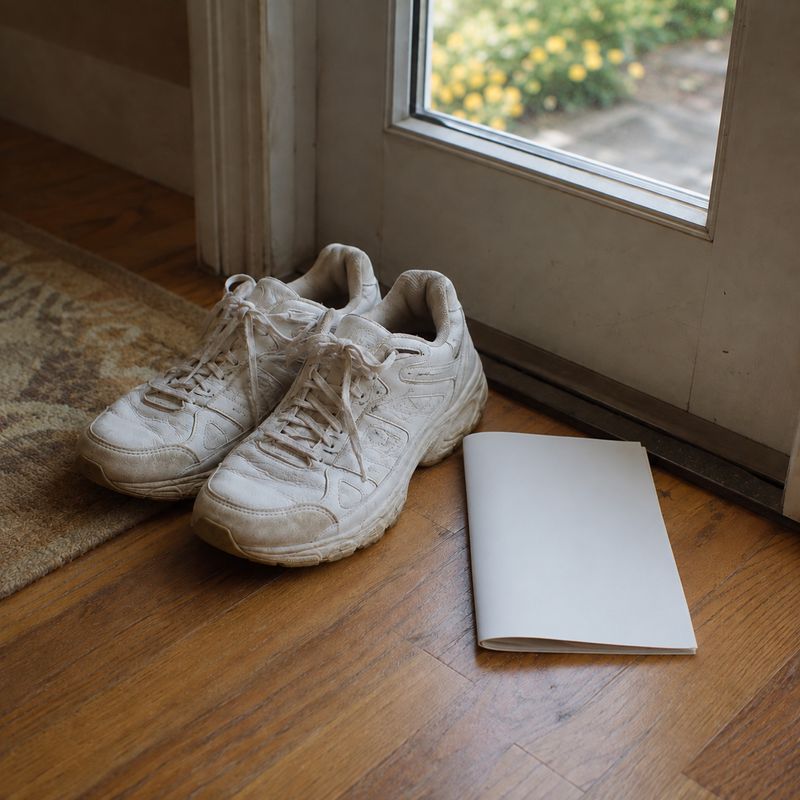
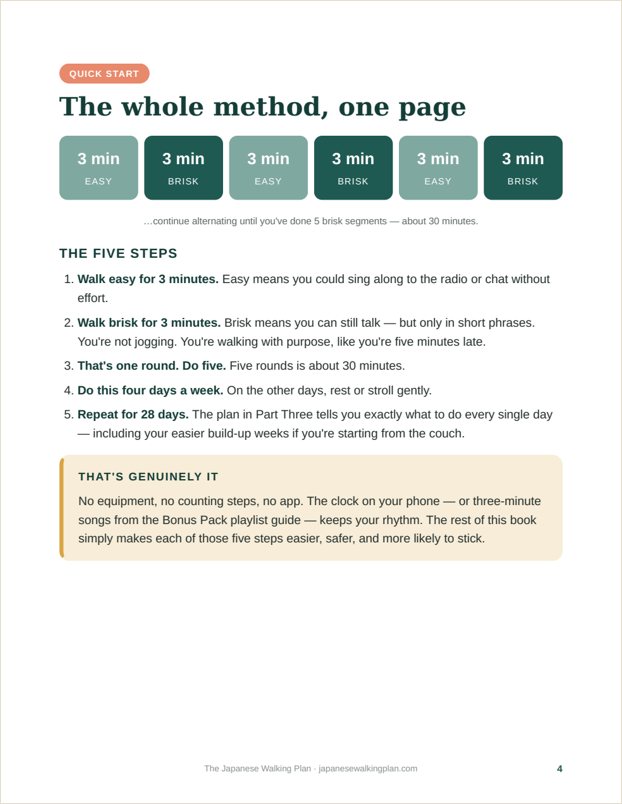
The Quick Start is one page. The whole method fits on it — tea optional but recommended.
3 minutes easy, 3 minutes brisk, five times. Your voice is the speedometer — easy means you could sing, brisk means short phrases.
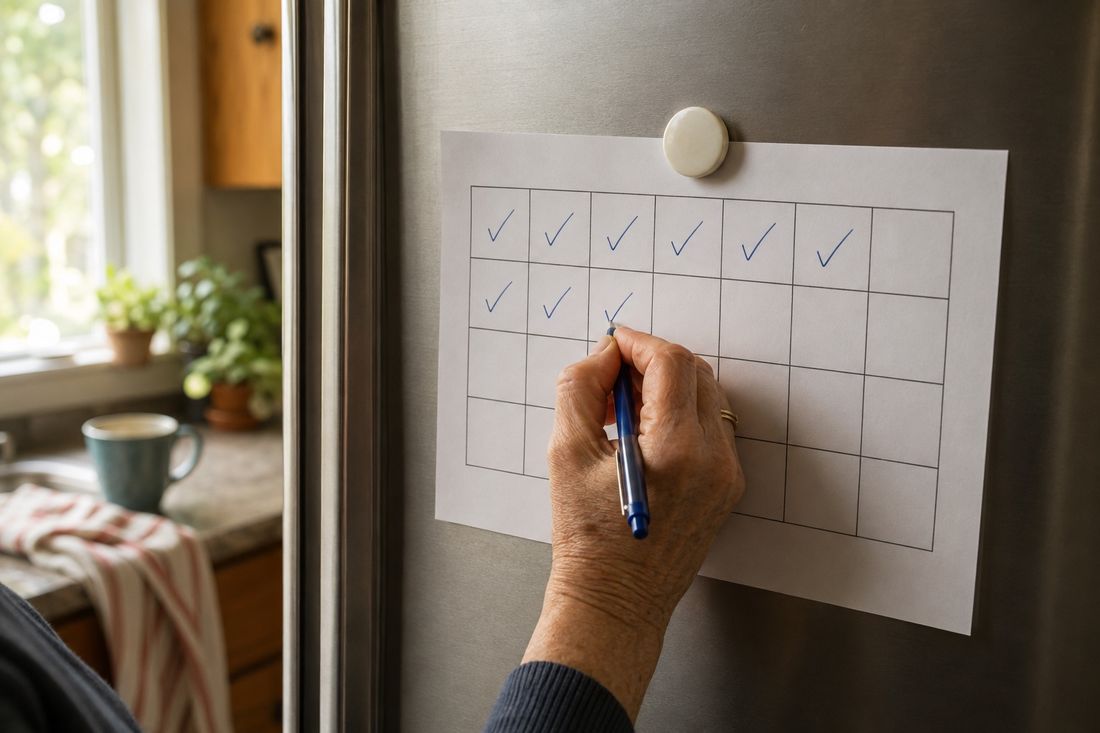
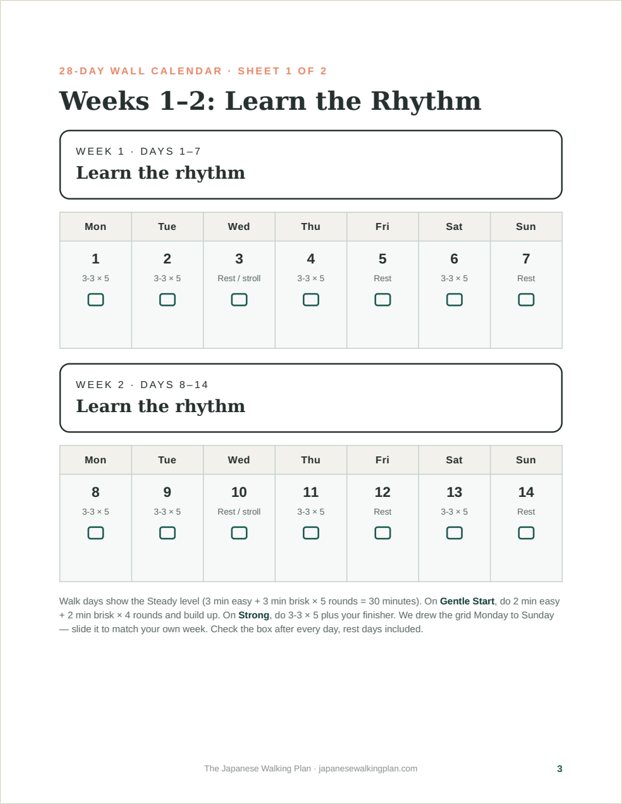
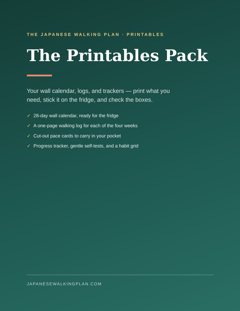
The wall calendar goes on the fridge. 28 days, 16 walks, three levels — every single day already planned for you.
In the landmark study published in Mayo Clinic Proceedings — 246 adults, average age 63, five months of interval walking at least 4 days a week:
A larger 2019 follow-up (679 adults, average age 65) found fitness rose ~14% and a combined lifestyle-disease score improved ~17% — and traced the benefit to one thing: about 50 brisk minutes per week. Not steps. Not miles. A 2020 review spanning 10,000+ participants reported better sleep quality, mood, and cognitive measures too.
Full citations are printed inside the guide and at the bottom of this page — take them to your doctor. Study outcomes describe research participants over 4–5 month programs; individual results vary.


Large print throughout. Read on any phone, tablet, or computer — print only what you want.
31 large-print pages
12 pages, ink-friendly
12 pages
| Walking apps | Free videos | This plan | |
|---|---|---|---|
| Cost | $30–48/month, auto-renews | Free, but no plan | $27, once |
| A day-by-day plan | Behind the subscription | You're on your own | All 28 days written out |
| The studied 3-3 protocol | Sometimes, simplified | Hit or miss | Followed faithfully, cited |
| Works without a phone | Phone required | Screen required | Paper, fridge, pen |
| Cancel anytime? | Good luck | — | Nothing to cancel. Ever. |
App pricing based on published rates of leading walking-plan apps, August 2026.
$47
Visa · Mastercard · Amex · Discover · PayPal — via secure encrypted checkout
Email us within 30 days for a full refund — no forms, no phone calls, no "retention specialist." That's the entire policy.
We think a walking plan should work like a good pair of shoes: you buy it, it's yours, it does its job for years.
No trial that quietly becomes $40 a month. No cancellation maze. No app between you and the sidewalk. Just the studied method, beautifully printed, on your fridge.
Yes — the interval walking method developed at Shinshu University that TODAY, CNN, TIME, and AARP have covered. Our plan follows the studied protocol faithfully (and cites the original research by name). We're an independent publisher — not affiliated with those outlets or the university — we've just done the work of turning the research into a day-by-day plan.
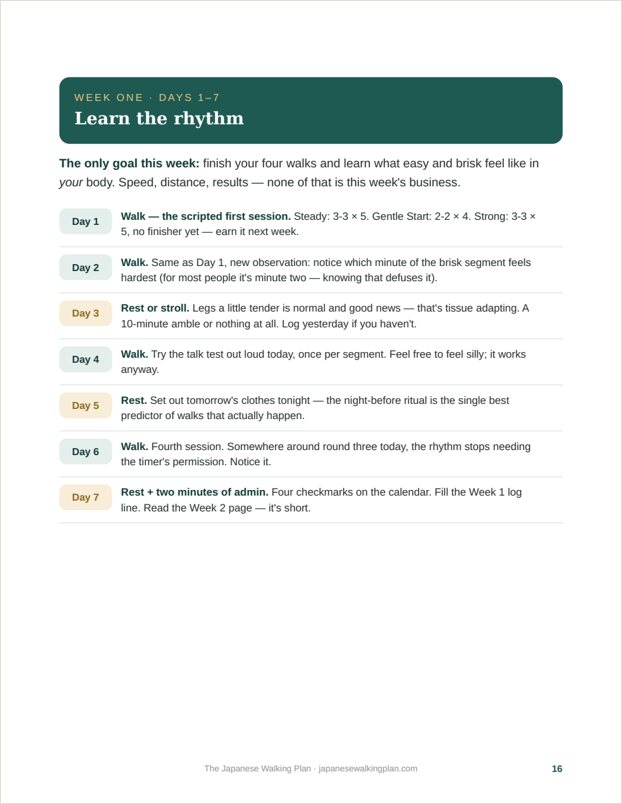
The plan has a Gentle Start level that begins with 2-minute segments and about 16 minutes total, building gradually to the full protocol by Week 3. The original research was done on ordinary, mostly sedentary adults in their 50s–70s — this method was literally designed for people who don't exercise. (And please check with your doctor before starting, as with any new exercise.)
It's still just walking — no jumping, no jogging, no impact spike. The guide teaches the two habits that make walking kinder to knees (shorter, quicker steps and a soft heel-to-toe roll), and every session starts with a built-in gentle warm-up. Sharp or persistent joint pain is always a see-your-doctor matter, not a push-through matter — the guide is direct about that.
No. Supportive shoes, a clock, and somewhere to walk — sidewalk, park, mall, or treadmill if you prefer (the Bonus Pack includes the treadmill conversion). No weights, no gadgets, no app.
Instantly, by email, as three PDF files. Read them on any phone, tablet, or computer — and print the calendar and trackers on a regular home printer. If you can open an email attachment, you're fully qualified.
No and no. $27 once. Nothing renews, there's nothing to cancel, and we don't store your card. It's yours forever, including any updates we make to this edition.
We won't promise you specific results — anyone who does is selling something they can't back up. What we can tell you: the published studies (4–5 months) measured meaningful gains in leg strength, fitness, and blood pressure, and the plan includes Day-1 and Day-28 self-tests so you can see your own early changes in black and white. Most readers find the walks simply start feeling easier around Week 3 — that's fitness arriving.
Please talk with your doctor or physical therapist first — genuinely. If they give the green light, the Gentle Start level, flat familiar routes, and the talk test make this one of the most adaptable programs there is, and the plan never asks you to push past steady.
Then it's free. Email us within 30 days for a full refund — the whole policy is one sentence long.
P.S. — Less than one month of a walking app. Yours forever. And if week one doesn't convince you, it's free.